


NPA: NHSE chair’s drone remarks fundamentally misunderstand pharmacy’s role
Neil Trainis,
03 Jul 2026 2 Min
2 Min

Neil Trainis,
03 Jul 20262 Min
Neil Trainis,
03 Jul 20262 Min


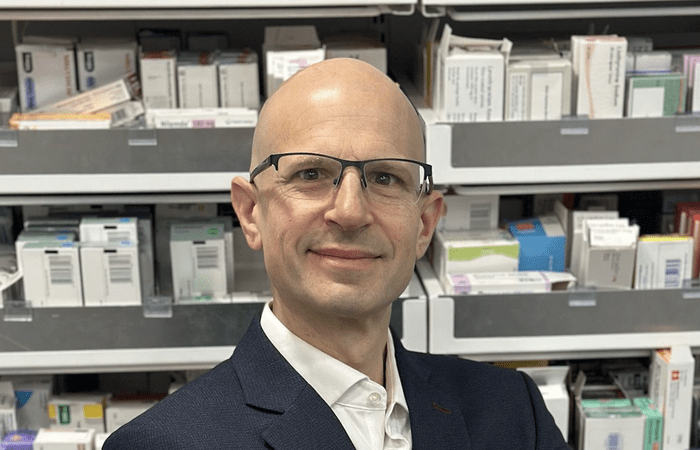
The National Pharmacy Association chair Olivier Picard has criticised NHS England chair Dr Penny Dash for “fundamentally” misunderstanding the role of community pharmacy after she claimed “the overall majority” of medicines in future will be delivered to patients by drones instead of being dispensed by pharmacies.
Dr Dash’s comments during Tuesday’s Company Chemists’ Association (CCA) conference in London, in which she said drone technology will eventually mean “it will be unusual to go to a pharmacy” to get medicines, drew a firm response from Picard who strongly rejected her claim.
“It’s implausible that community pharmacy’s place in the medicines supply chain could be successfully replaced by a cloud of Amazon drones,” he told Independent Community Pharmacist.
“While it’s natural that the NHS should want to achieve efficiencies by optimising the use of technology, a face-to-face relationship between health professionals and patients will always be an important aspect of quality care in the community, which includes the pharmacy network.
“Dr Penny Dash's comments fundamentally misunderstand what community pharmacy does. Community pharmacy is not simply a distribution network for medicines that can be replaced by drones or courier deliveries.”
Emphasising the importance of pharmacists providing in-person advice when medicines are supplied, Picard said: “Every day, pharmacists identify prescribing errors, intervene to prevent harm, support patients with complex medicines, and provide reassurance and clinical advice at the point medicines are supplied.
“We welcome innovation and embrace technology where it improves patient care. Automation, robotics and digital tools all have an important role to play. But technology should support the relationship between patients and healthcare professionals, not replace it.”
Picard insisted the “future of pharmacy is more clinical care in the community, not less human contact” and warned “separating medicines from the professional oversight that accompanies their supply risks weakening one of the NHS's most accessible and trusted services”.
“Our members want to use technology to spend more time caring for patients, not to see community pharmacy reduced to a warehouse and a delivery network,” he said.
However, the CCA chief executive Malcolm Harrison said Dr Dash’s comments provided “real insight into some of the strategic challenges and opportunities that face the health service in England”.
“Dr Dash spoke about the inevitability of change,” Harrison said. “She recognised that how people want to access their care is changing and will likely continue to evolve. Obviously, there will be a role for both new and innovative technologies in this evolution.”
Harrison cautioned that future innovations in pharmacy hinge on the ability of owners to put their money into technology and warned the current contractual framework “leaves little opportunity or incentive” to invest.
“If the NHS wants to see more novel delivery models, they will need to factor the cost of bringing new technologies to market in any future funding settlements,” he said.


